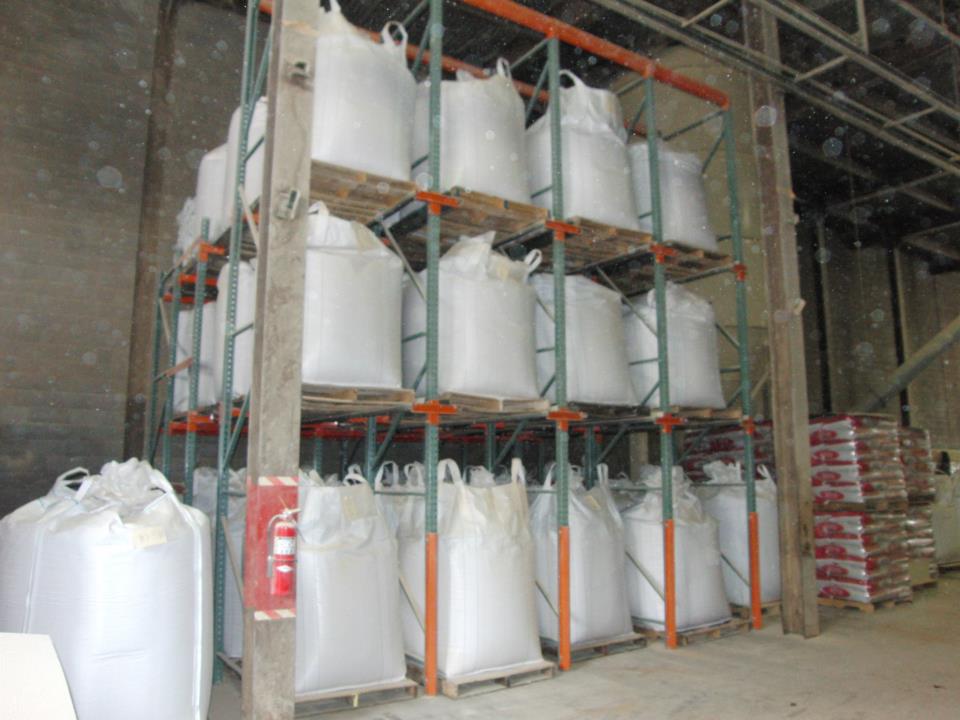
Drive-In Rack in North Tonawanda, NY
Drive-in rack in North Tonawanda can concentrate repeated reserve pallets without treating every SKU as a deep-storage candidate. It suits many pallets of relatively few products, provided retrieval order and forklift movement match the lane arrangement.
The truck travels into the structure while pallet edges rest on supporting rails at each level. That interaction matters in older buildings along River Road, where columns and crane bays can constrain both storage depth and the approach turn.
In the Erie Canal industrial corridor, fixed production equipment should define the boundaries before reserve positions are counted. A compact block is not useful if reaching it repeatedly interrupts the path between a process and its supply area.
Your drive-in rack project sequence
Start by describing the movements that cannot change in your plant. Inventory depth becomes meaningful only after the drawing preserves those movements and identifies space for loading, retrieval, and temporary staging.
Follow the manufacturing route
Trace how raw materials, packaging, and finished goods move through the premises. Mark machinery access and crane envelopes before setting aside a reserve storage footprint.
Test lane occupancy
Use typical product holdings to assign a candidate depth. Check whether partially filled lanes would lock up positions that a different product cannot use without compromising access.
Resolve the truck geometry
Check the working forklift against rail elevations, guide positions, and entry turns. Review the two-ended alternative only where both approach aisles can remain available during normal operations.
Sequence the installation area
Agree an accessible assembly zone and delivery route with the operating team. Our managed crew schedule follows that plan, with the finished arrangement reviewed before routine stocking begins.
Why drive-in rack must follow production flow
New equipment proposals should explain which inventory belongs in lanes and which needs direct access. We are part of Warehouse Equipment & Supplies Co. as its division, drawing on a warehouse equipment supply and installation history beginning in 1997.
We schedule experienced installation crews and manage their work within the agreed plant area. Planning includes where materials can be received and assembled, particularly when manufacturing and warehouse functions share the same building.
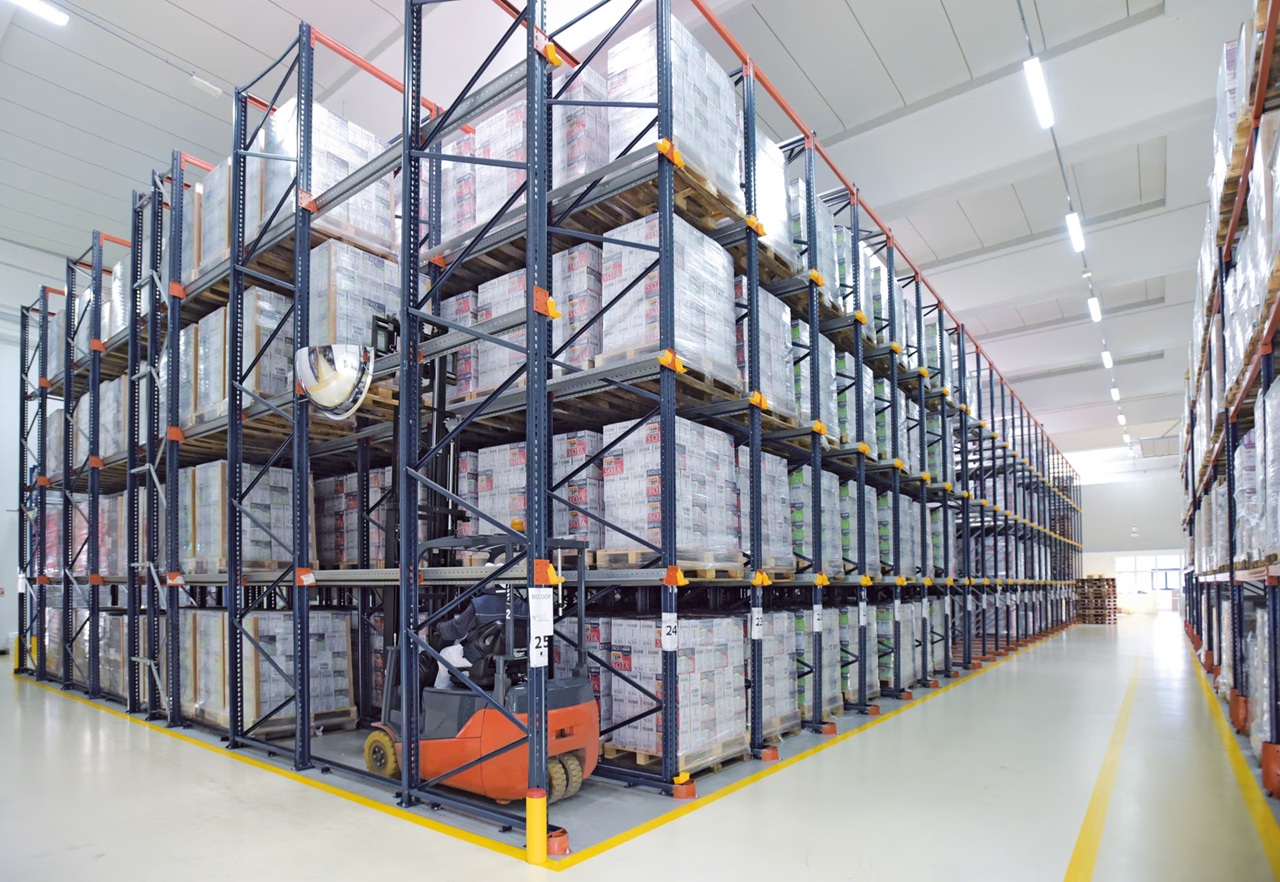
North Tonawanda Lane Storage Planning
Keep empty pallets, part-used batches, and changing production supplies out of the assumed reserve count. They may need their own accessible area, particularly where a canal-side building already combines manufacturing, storage, and overhead handling.
Drive-in pallet rack layout decisions
Drive-in pallet rack has one access face and uses LIFO handling within the lane. For FIFO movement, drive-thru racking requires both-end access, with receipts entering one side and withdrawals occurring at the other according to the rotation plan.
Pallet underside construction determines whether the intended bearing points can sit properly on the rails. Record loaded dimensions, overhang, maximum weight, and any packaging variation before assigning products to a common lane configuration.
Use the actual forklift profile to review clearance at the guides, support rails, and upper structure. Mast, overhead guard, attachments, and load backrest all matter; the widest truck-body measurement cannot represent every part passing through a lane.
Cooler or freezer reserve may benefit from compact pallet storage when repeated food products justify the depth. Check temperature suitability for the handling equipment and keep door approaches available for staging rather than filling them with waiting loads.
Compare pushback for manufacturing reserves that require shorter lanes and truck operation from the aisle. Its carts support pallet movement inside the system, generally with LIFO retrieval, while selective storage can preserve access to varied marine or maintenance supplies.
Recent Installations
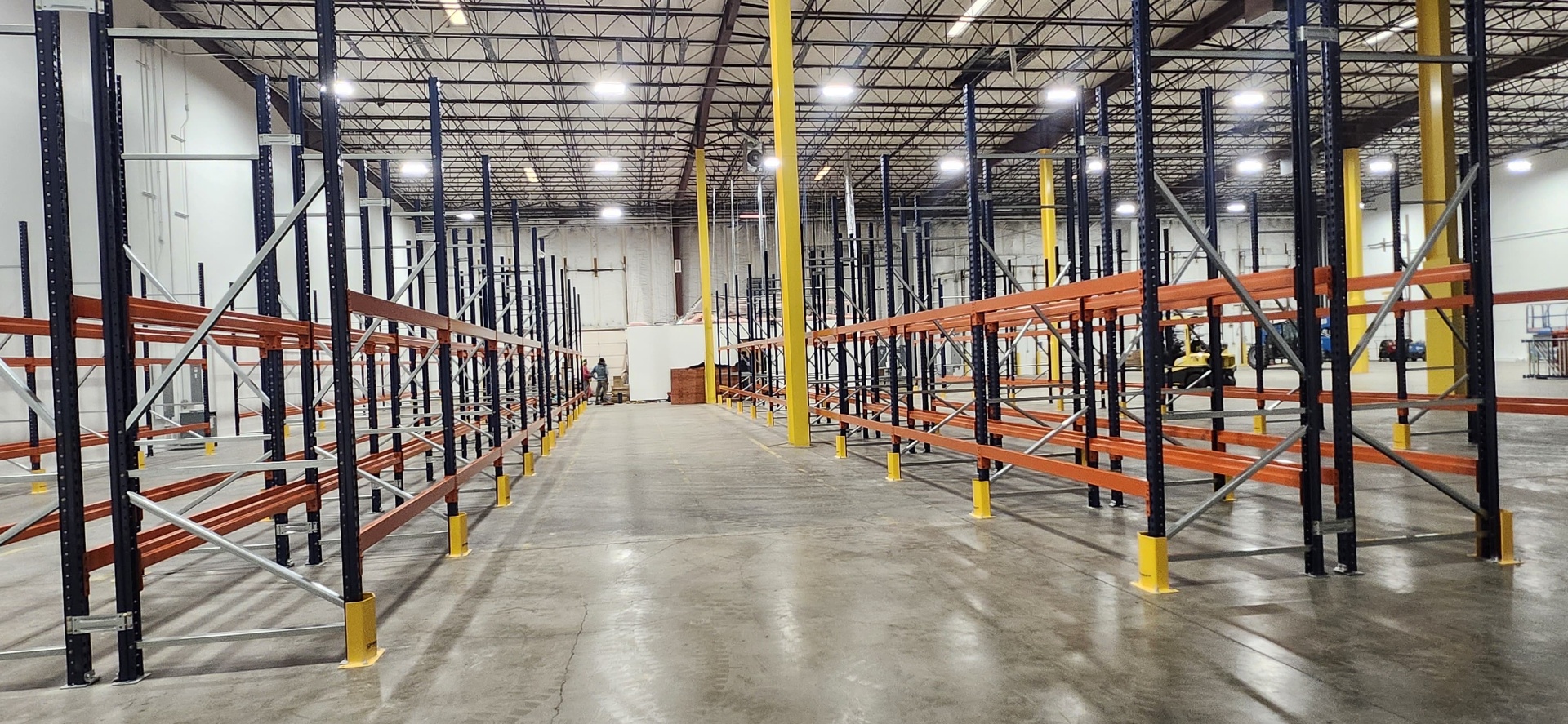
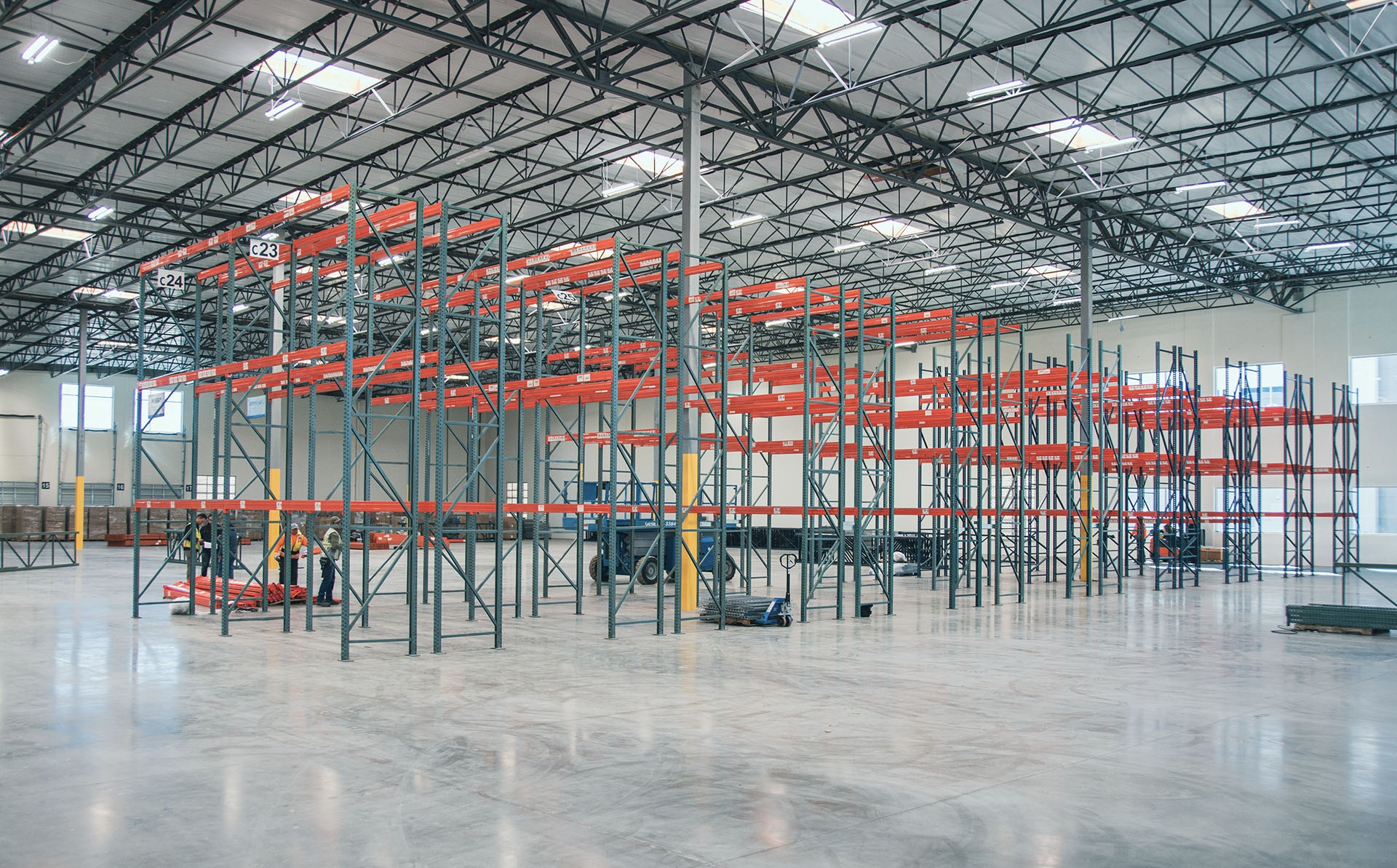
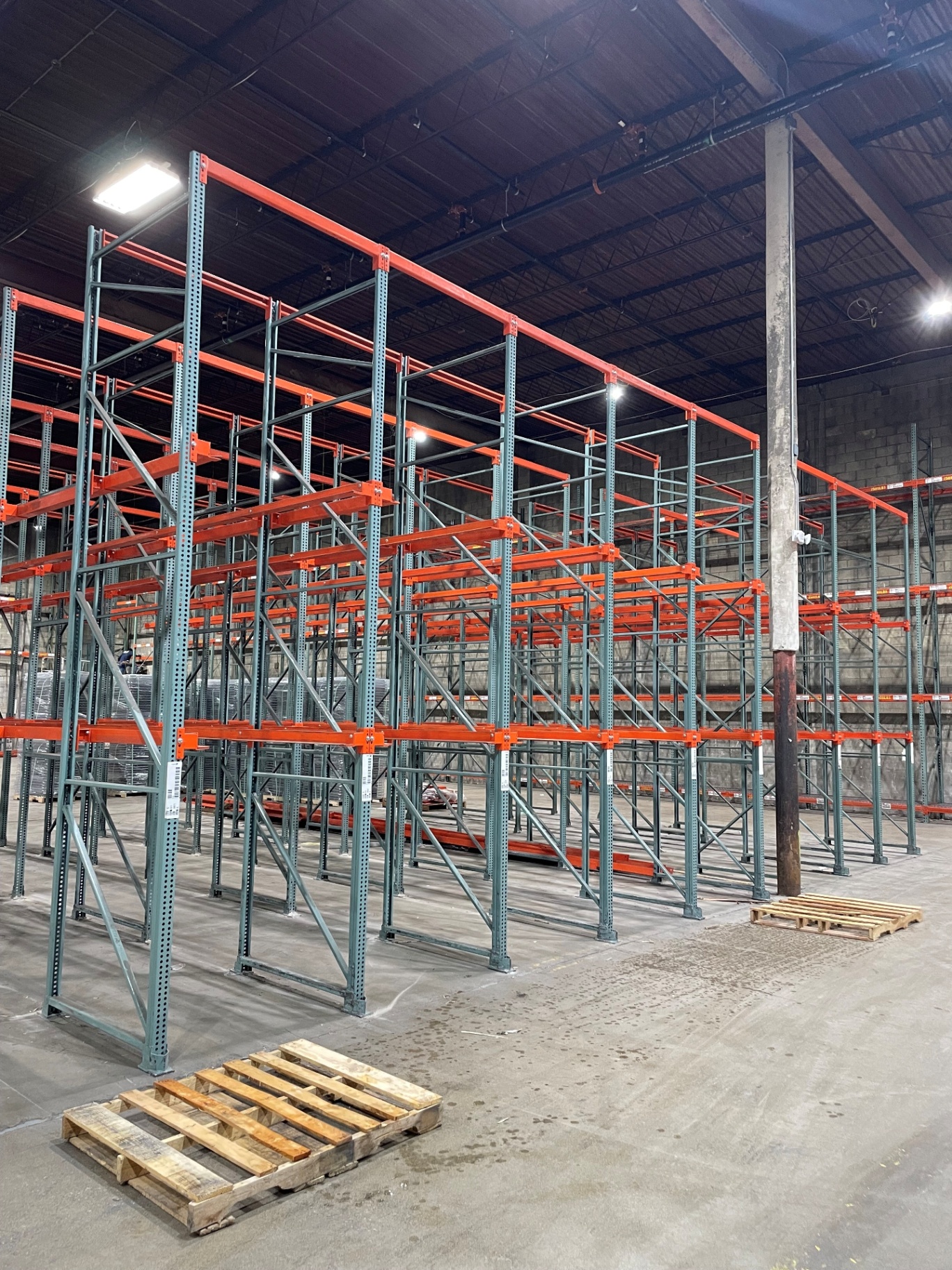
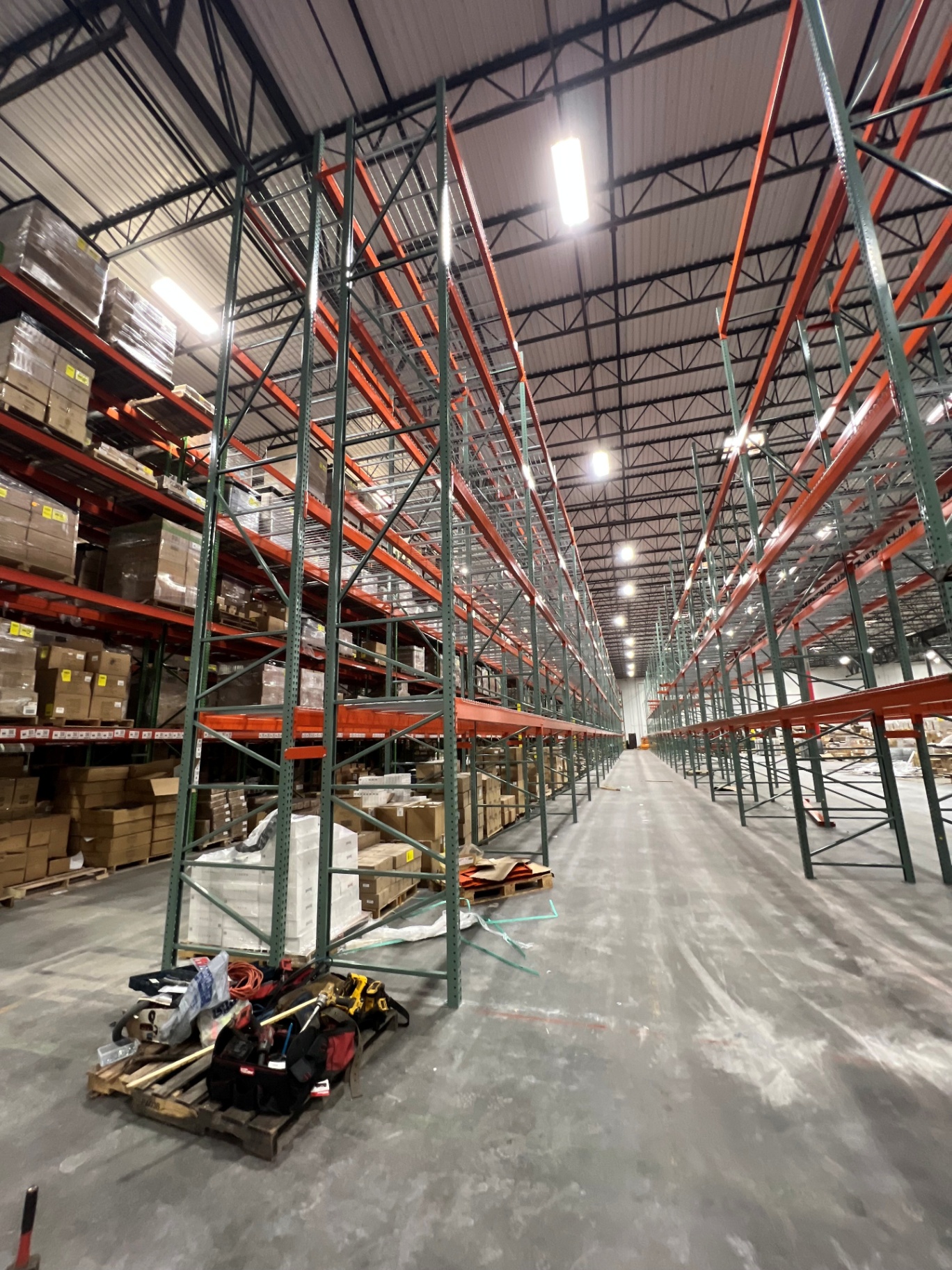
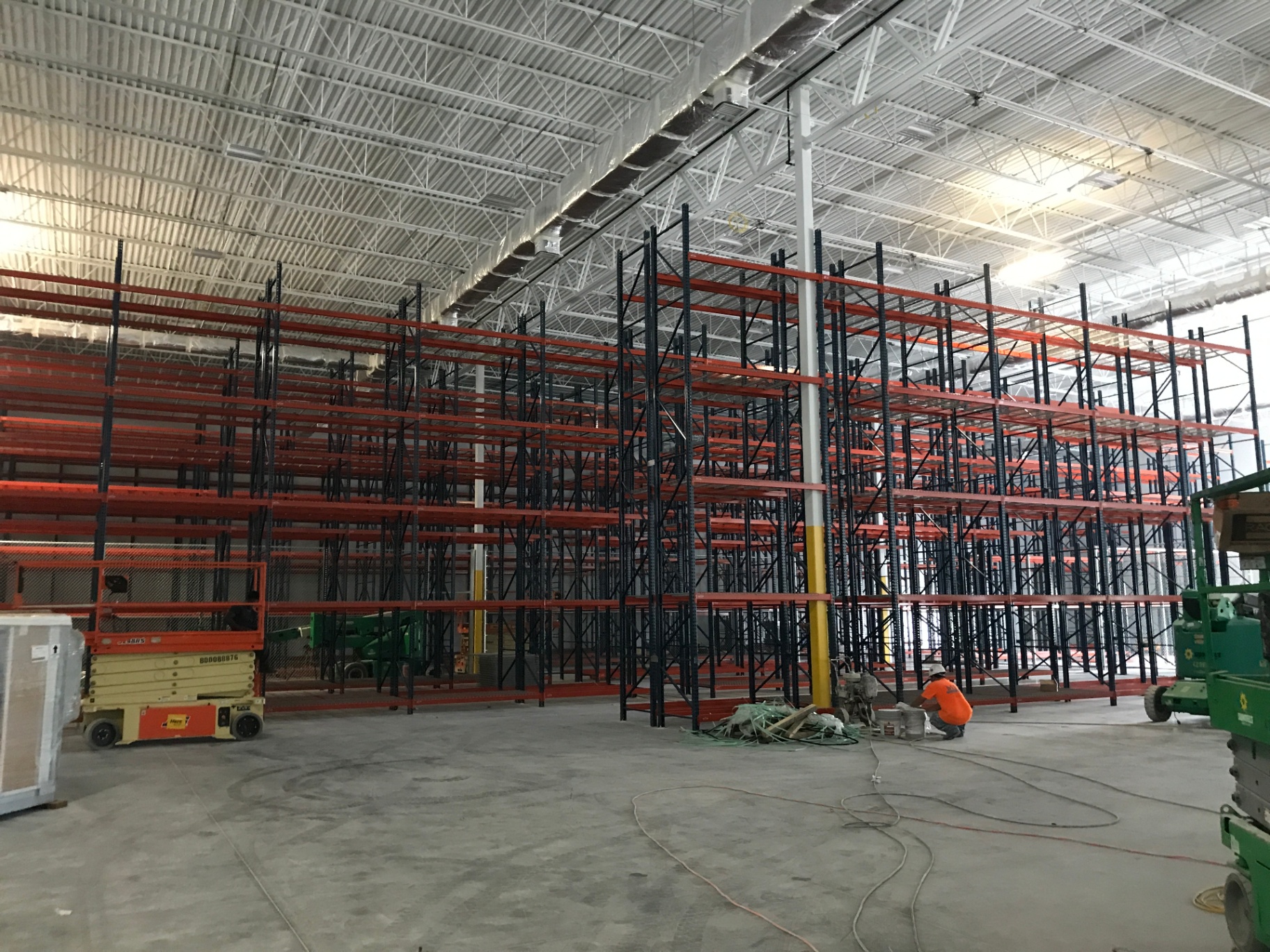
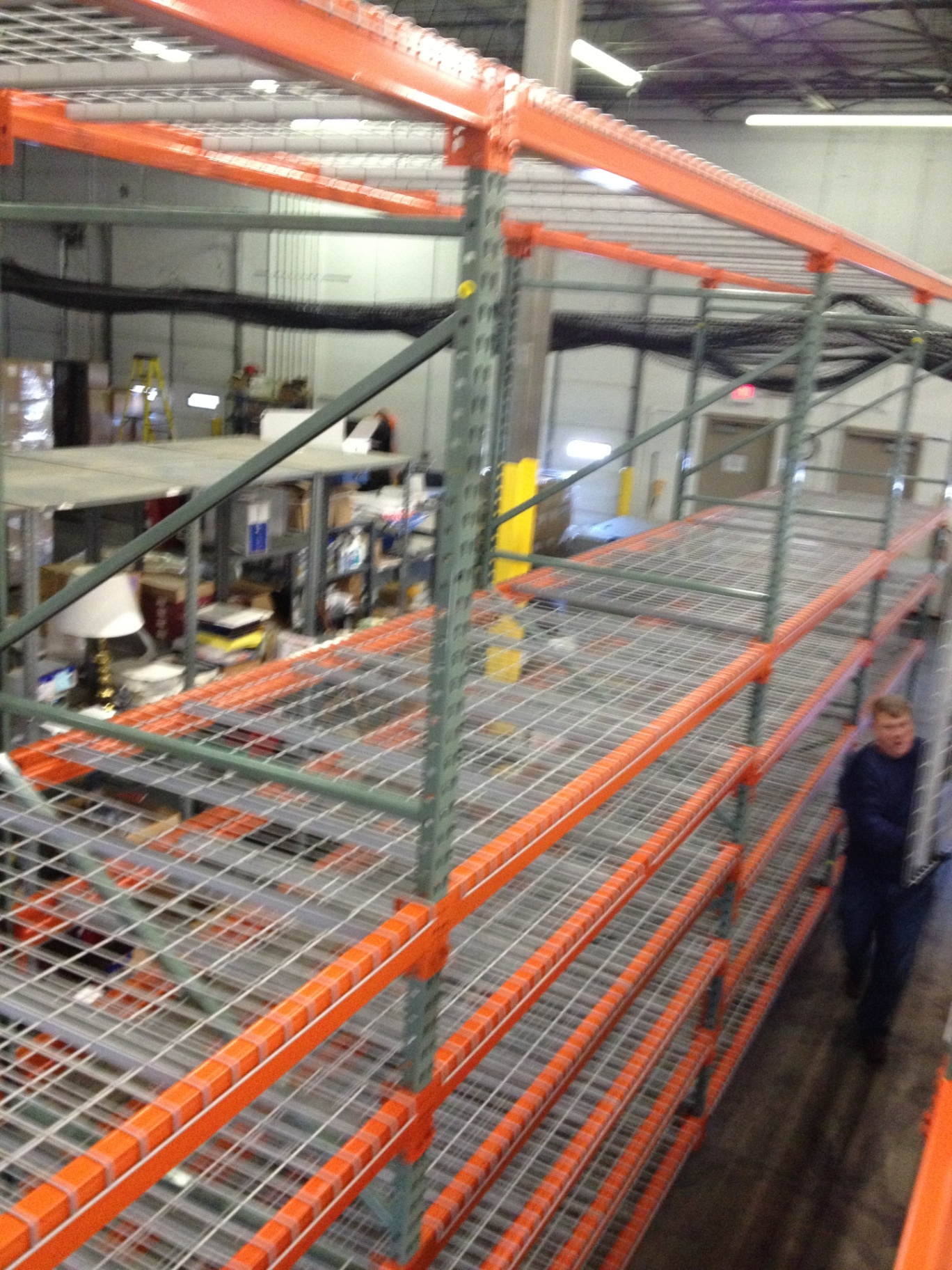
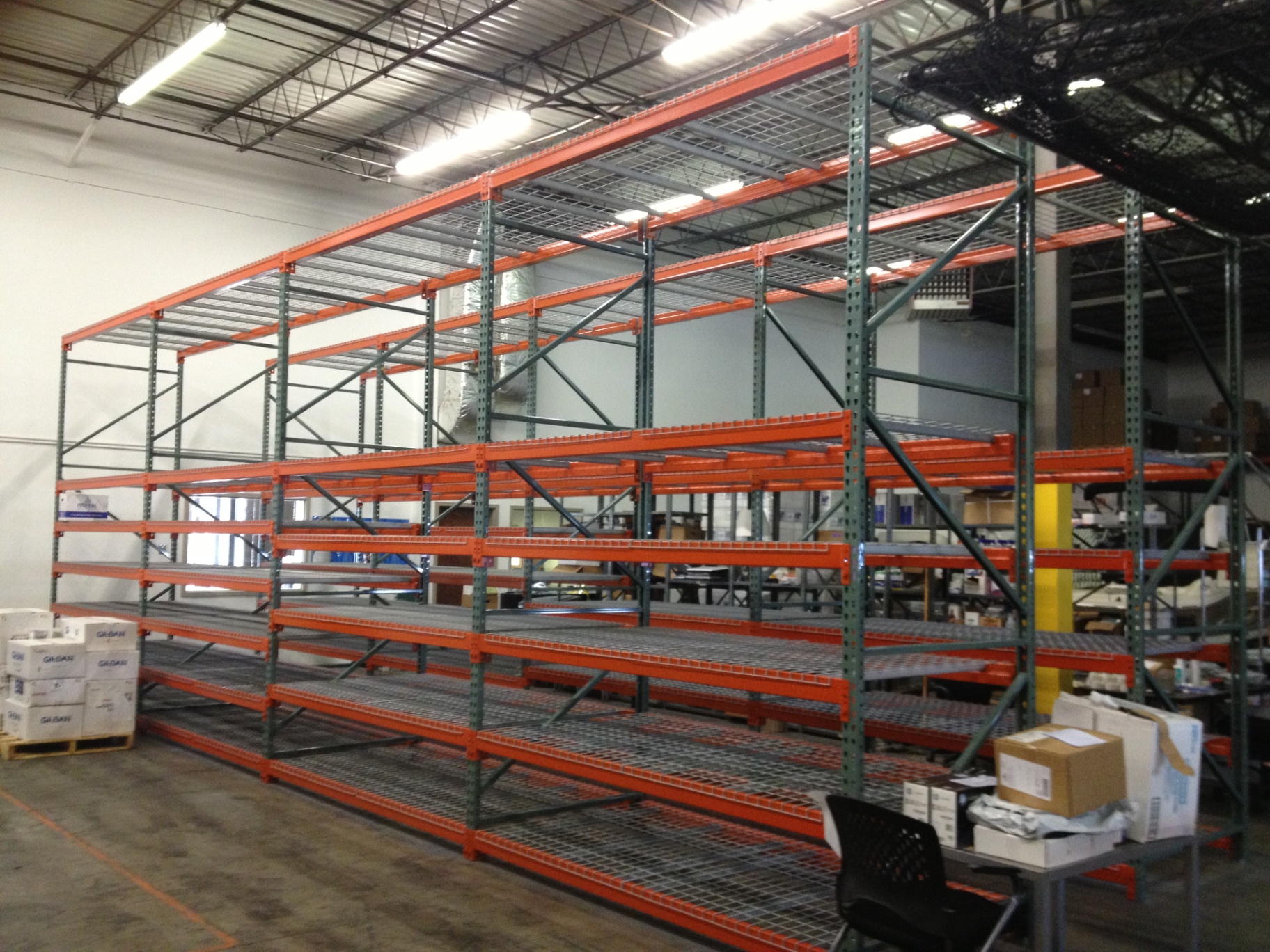
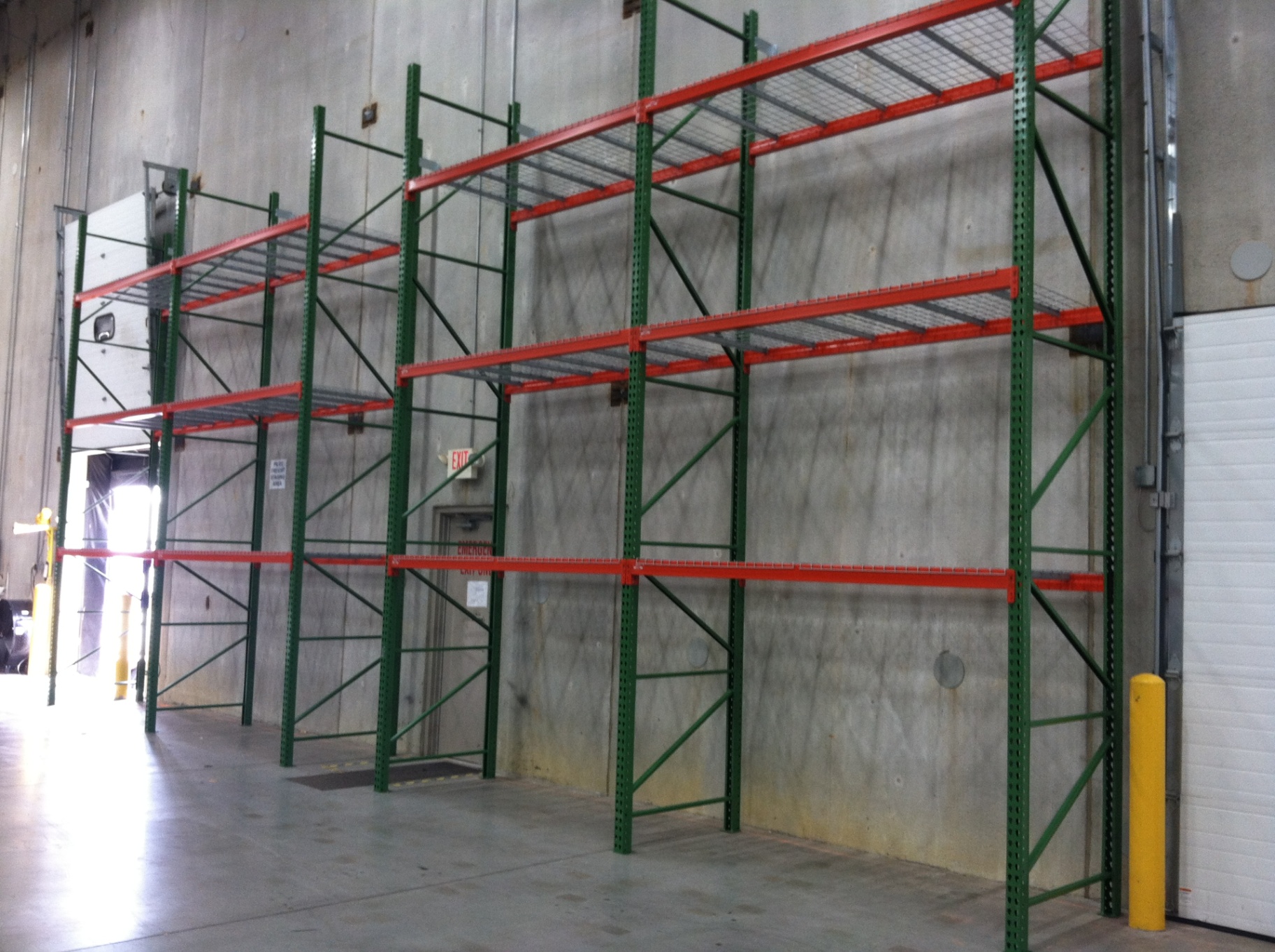
Racking projects completed for warehouses across Buffalo and Western New York.
Plan storage beside your production area
Let us compare your repeat reserve with the usable space beside production and the trucks that will handle it. Call (716) 261-2779.
Buffalo Pallet Rack
2075 Kenmore Ave.
Ste 100A
Buffalo, NY 14207
(716) 261-2779Monday - Saturday: 8:00 AM - 6:00 PM
Practical questions before ordering
Other Rack Types We Supply in North Tonawanda
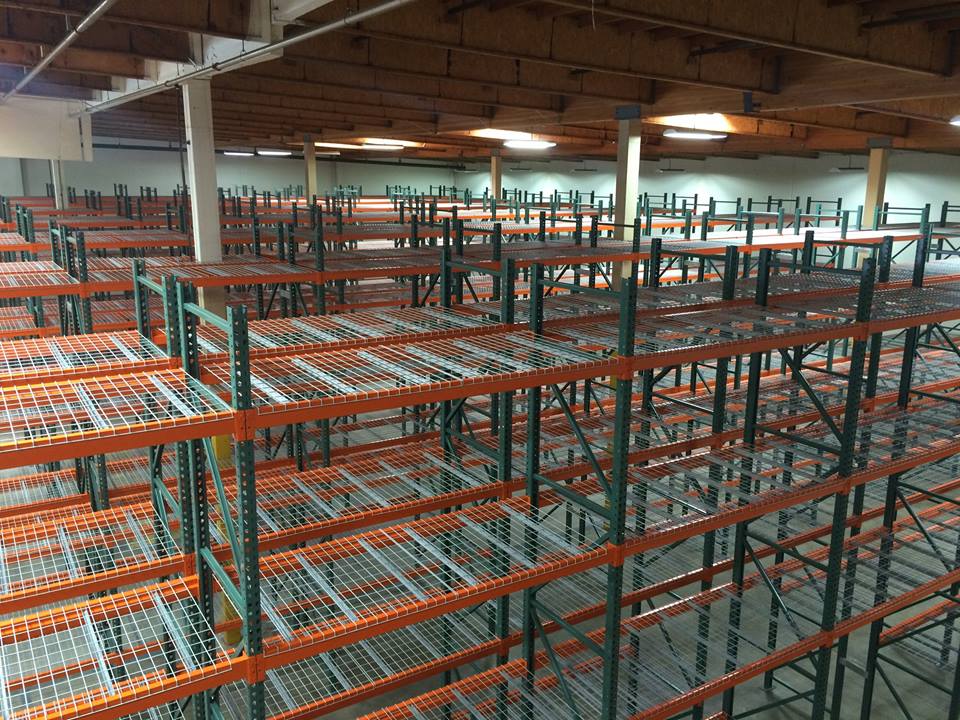
Pallet Rack
Every pallet reachable, every time. The baseline we size everything else against.
View details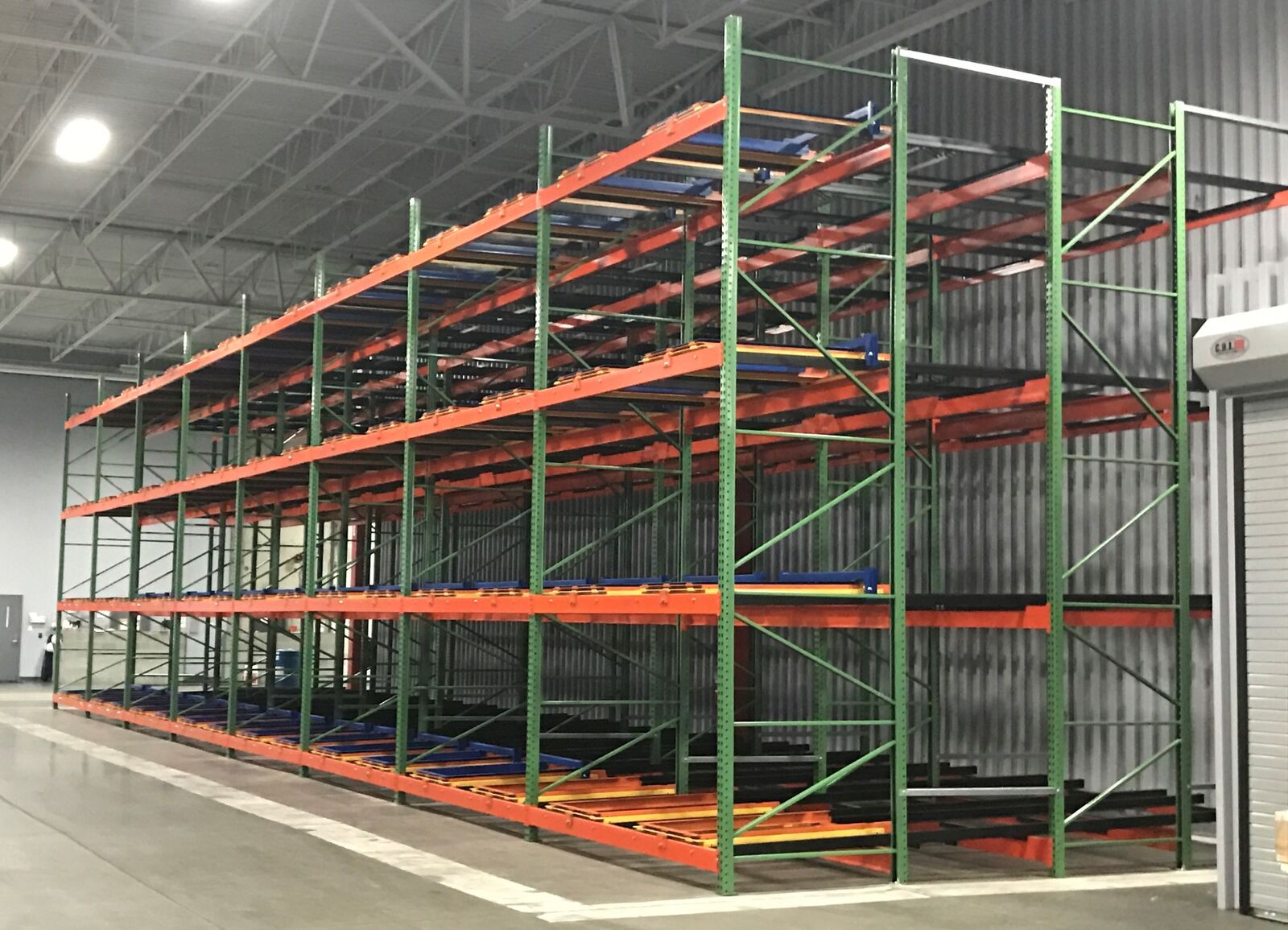
Pushback Rack
Two to six pallets deep from one aisle, without giving up much reach.
View details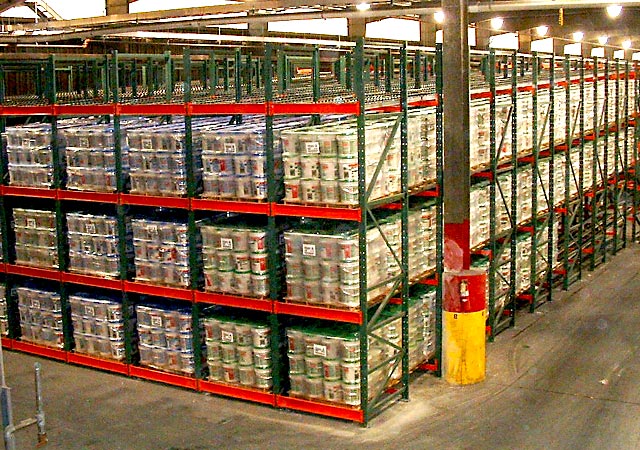
Pallet Flow Rack
Load one side, pick the other, and let gravity enforce first in, first out.
View details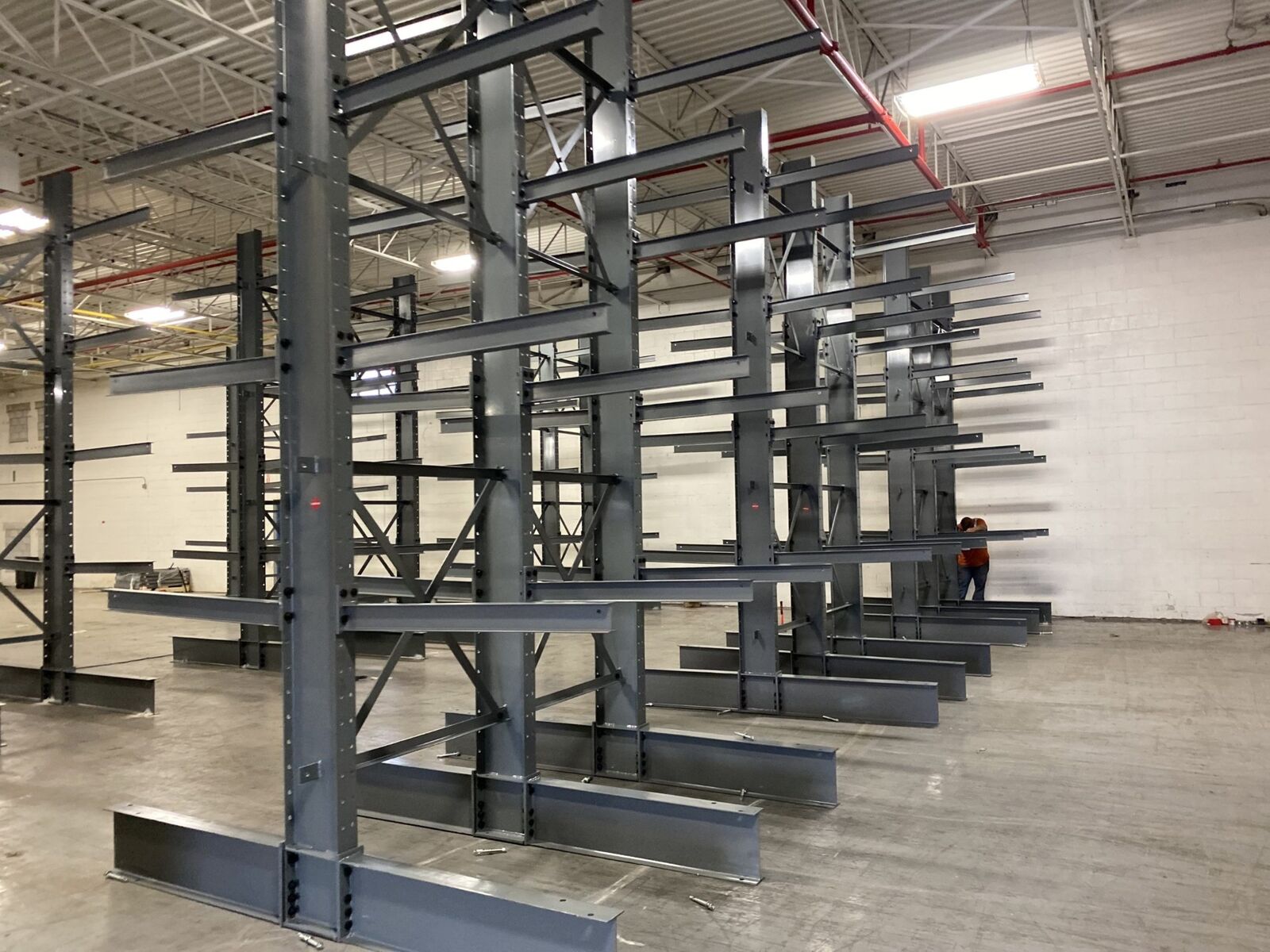
Cantilever Rack
Arms with nothing in front of them, built for lumber, pipe, and anything a pallet can't hold.
View details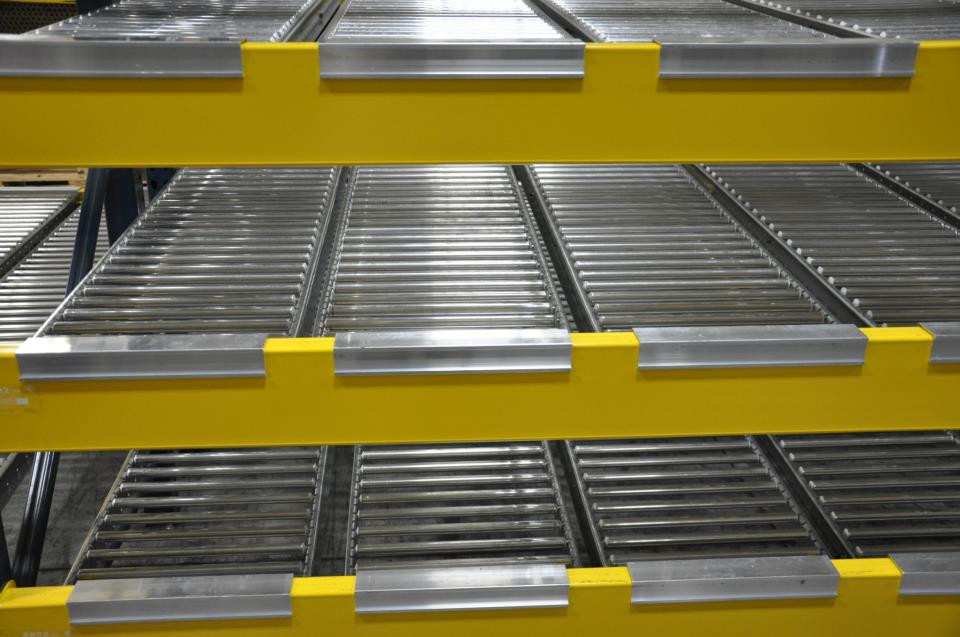
Carton Flow Rack
Cases advance to the picker instead of the picker hunting for cases.
View detailsNorth Tonawanda industrial coverage
Planning covers the Erie Canal industrial corridor, River Road, and Witmer Industrial Estate with attention to each building’s work pattern. I-190-related delivery routes do not replace a check of the final unloading and assembly approach.
Warehouse Relocation in North Tonawanda
Moving to another building? Plan rack teardown, labeling, transport coordination, and reinstallation against the new layout.
Visit Our Buffalo Location
Located in Buffalo, we serve all of Western New York with industrial pallet racks and warehouse storage solutions.
Buffalo Pallet Rack
Address
2075 Kenmore Ave.
Ste 100A
Buffalo, NY 14207
Phone
(716) 261-2779Business Hours
Monday - Saturday: 8:00 AM - 6:00 PM
Sunday: Closed
Need Drive-In Rack in North Tonawanda?
Call (716) 261-2779 or request a quote and we will get a layout started.